
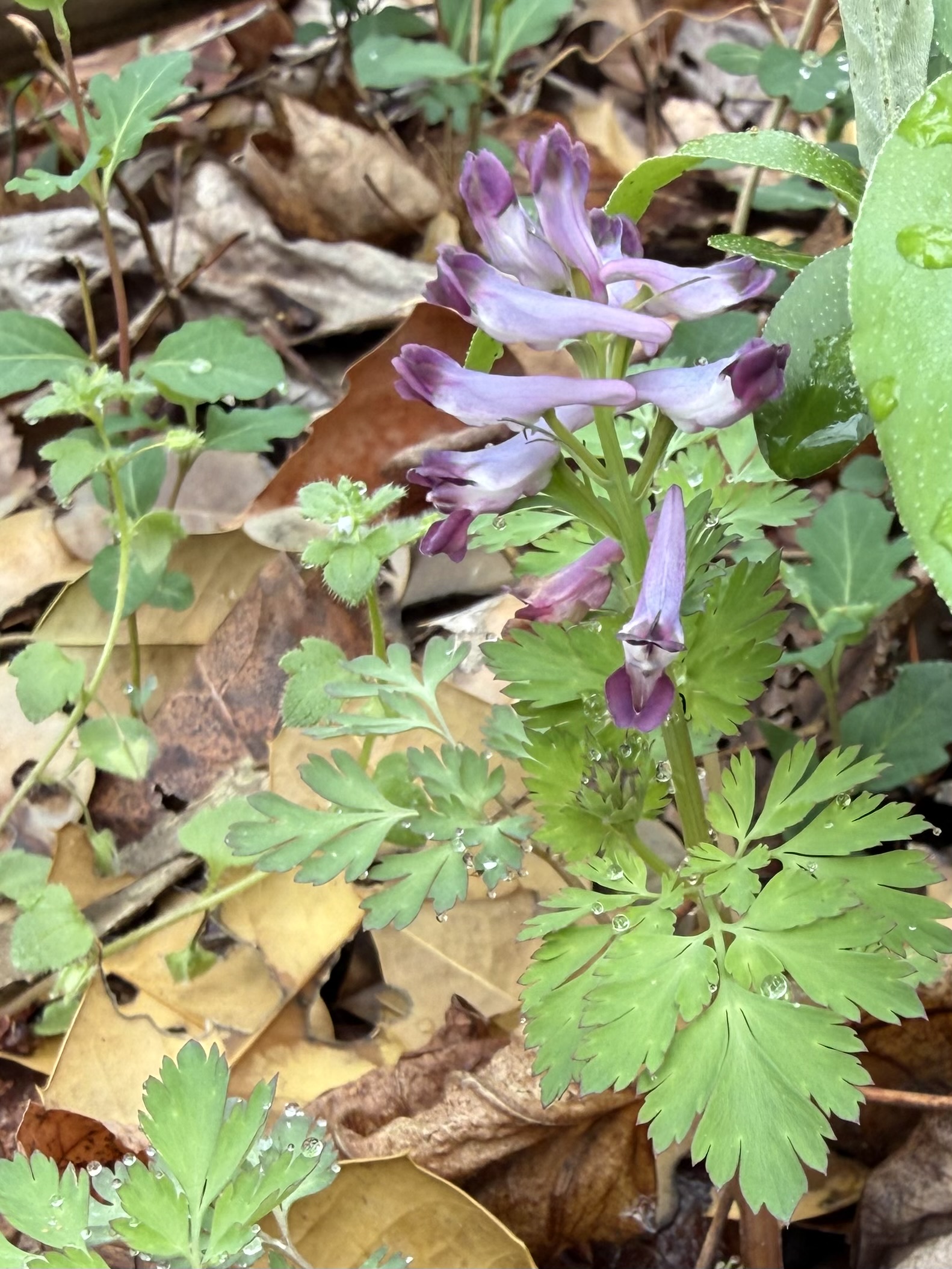
Alert: Help Stop the Spread of Incised Fumewort
Early April is the perfect time to spot and report an invasive plant called Incised Fumewort (Corydalis incisa). This plant might look pretty, but it is a serious threat to our local environment.
Why Is It a Problem?
Incised Fumewort started as a garden plant, but it "escaped" into the wild. It grows very quickly and creates thick mats of plants that crowd out the native flowers and greens that our local wildlife needs.
You will most likely find it in flood plains or near stream valleys, where the soil is moist. It spreads easily because its seed pods "explode" when touched, shooting seeds up to 9 feet away!
How to Identify It
The best way to tell it apart from native plants is by looking at its flowers.
- Flowers: Look for clusters of small, tube-shaped flowers.
- Size: Each flower is about to inches long.
- Color: The flowers are usually purple or pink with darker tips.
Note: There are many native plants that look similar. If the plant isn't blooming (usually between late May and early April), be extra careful with your identification to make sure you aren't pulling up a helpful native plant.
What You Can Do
- Report It: Use the iNaturalist app to snap a photo and mark the location. This helps experts track where the plant is spreading.
- Remove It: * Hand Pulling: This is the best way to get rid of it.
- Get the Roots: Use a garden tool to make sure you pull up the entire root system, or it might grow back.
- Dispose Safely: Put the plants in a trash bag and throw them in the regular garbage. Do not put them in your compost or yard waste bin, or the seeds might spread to a new area!
Fairfax County EDRR page
iNaturalist getting started information
National Capital Region Invader Detectives info blog on Incised Fumewort